


Footwear
Investment Opportunities
Select the sector of your interest


Success Story
Sitel
Testimonial about the success of the contact center company Sitel, which operates in two locations in Managua.
Footwear Manufacturing
Overview
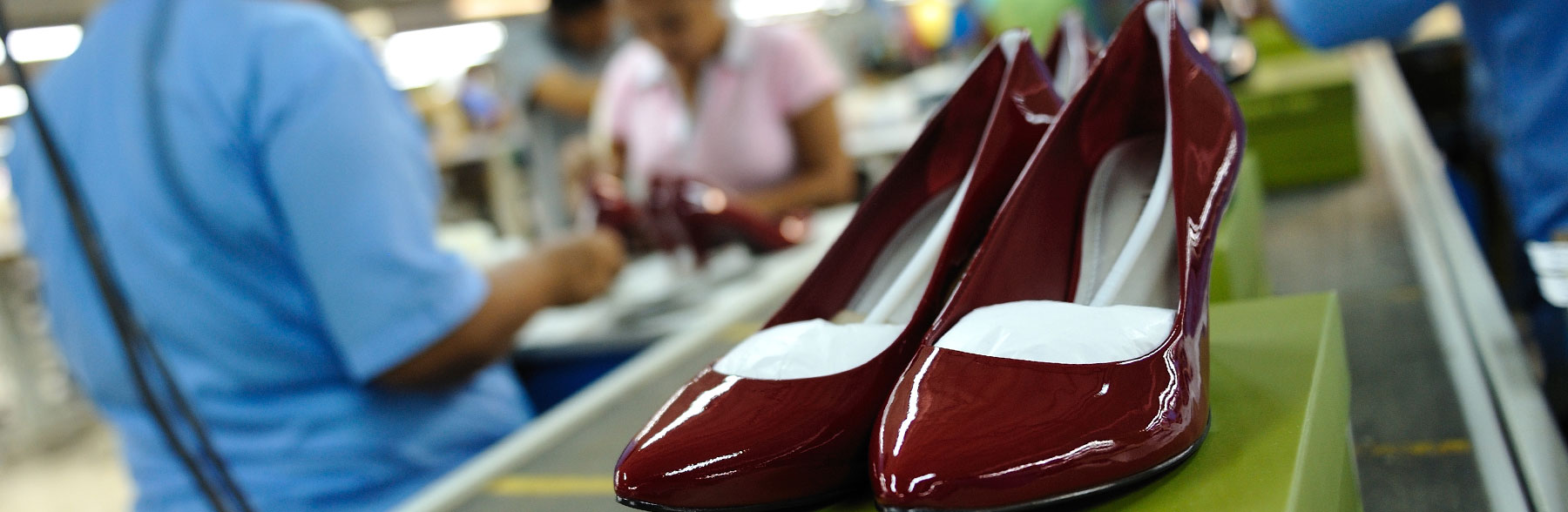
Although Nicaragua has a long and renowned tradition of footwear manufacturing at an artisan level, the year 2010 marked the beginning of industrial production and high-volume exports of fine leather footwear to the United States and the European Union. This leap towards industrial scale production of high-value footwear is due to the significant investment of Brazilian company Aniger Group, which established operations in Nicaragua under the name of Tecshoes Latinoamérica in August 2011.
This new investment confirms Nicaragua as an attractive and competitive export platform in the global footwear industry.
This company, which operates under the free zones fiscal incentives regime, left an important mark in this growing manufacturing subsector. This is why in 2012 the Footwear Distributors and Retailers of America (FDRA) highlighted Nicaragua as “a rising star” in terms of footwear production worldwide.
According to a study performed by the Footwear Distributors and Retailers of America (FDRA) in 2012, Nicaragua proves to be especially competitive in women’s leather heels. The study, based on actual survey results from manufacturers, compares nine different countries at each step of the production process, including raw materials, labor, efficiencies, packaging, shipping, overhead and import duties.
LDP Reference Costs in the U.S. per Supplier Country - Dress Heel Shoes (Leather)
 Source: Nicaraguan Footwear Competitiveness Study by Footwear Distributors and Retailers of America (FDRA), November 2012.
 Nicaragua's Footwear Industry at a Glance
|
Main Products |
Footwear with leather uppers (loafers, high heels), synthetic shoes, rubber boots and safety |
|
Export Destinations |
USA, Costa Rica and Panama |
|
International Brands |
Clark's |
|
National Brands |
Rolter, Tosca, ECCO |
|
Total Jobs under Free Zones |
Approximately 800 |
|
Industrial Production in Free Zones |
Approximately 4,000 pairs daily |
Investment Opportunities
Investors find in Nicaragua significant quantitative and qualitative advantages for export-oriented footwear manufacturing projects, including: competitive labor costs and social stability, high personal safety levels –the highest in the region–, generous fiscal incentives, as well as a solid legal framework for investments.
Furthermore, the country’s strategic location right in the heart of the Americas, coupled with preferential access to the most important international markets, makes Nicaragua an ideal export platform.
The following products represent niches with attractive investment opportunities for footwear manufacturing projects in Nicaragua:
- Footwear with leather uppers: casual or high-grade fashion shoes.
- Functional boots for industrial protection or outdoor purposes.
- Synthetic shoes and sandals.
- Production of parts and accessories necessary to complement local supply chain.
Competitive Advantages
Competitive Cost Structure
Nicaragua has the most competitive labor costs in the region, which makes the country a prime location for labor-intensive operations. Fringe benefits include: social security, holidays and vacation leave, severance, 13th month bonus, and contribution to the National Training Institute (INATEC, for its acronym in Spanish). These benefits amount to 47 percent of compensation.
The following graph shows a comparison of fully-loaded wages in the region for manufacturing operations:
Mininum Wage in Free Zones per Hour Benchmark

Note: Guatemala includes monthly bonus.
Source: Central Bank of each country, 2014.
The Government of Nicaragua, the private sector and unions reached an important consensus to define minimum wage between 2011 and 2013 with the purpose of further supporting the growth of companies within the free zones regime.
Generous Fiscal Incentives
The Government of Nicaragua offers a series of fiscal incentives with the purpose of promoting investment in the country. These include:
Tax Concertation Law (Law 822)
This law grants fiscal exemptions to the export of goods and of services provided abroad and also establishes several fiscal benefits to certain productive sectors of the economy with the purpose of fostering their growth and development. Read more.
Temporary Admissions Law (Ley 382)
This law establishes a system that allows the entry of goods into national customs territory and local purchases of the same without payment of any duties and taxes. Companies that export directly or indirectly at least 25% of their total sales are eligible for this scheme. Read more.
Free Zones Law (Decree 46-91)
Nicaragua offers significant tax incentives under free zones regime for those companies interested in establishing export-oriented operations, in compliance with World Trade Organization regulations. Read more.
High Levels of Personal Safety
Nicaragua’s personal security levels have gained international recognition, as it has been recognized as one of the safest countries in the western hemisphere. The Economist Intelligence Unit (EIU) confirms Nicaragua’s high security levels in its 2014 country risk evaluation, ranking the country as one of the safest countries in the region. Additionally, Nicaragua has the lowest homicide rate in Central America.
Strategic Location and Preferential Access to Important Markets
Speed to market and duty-free benefits for products made in Nicaragua represent a significant advantage in such a dynamic industry as footwear manufacturing in terms of reduced inventory costs and increased ability to react to fashion trends and demands, all of which translate into higher profit margins.

The shipping response from Nicaragua to Miami Port is only four to five days. Additionally, direct flights to Miami and Houston take only two and three hours, respectively.
Nicaragua enjoys free trade agreements with major trading partners around the world. The country’s most relevant trade agreements include:
- The United States, Dominican Republic and Central America Free Trade Agreement (DR-CAFTA)
- Free Trade Agreements with Mexico, Taiwan, Panama and Chile
- Generalized System of Preferences with the European Union, Norway, Canada and Japan
- Central American Common Market (CACM)
Furthermore, the Association Agreement between Central America and the European Union will extend the list of products from Nicaragua with preferential access.
Testimonial
Aniger
The millionaire investment of Brazilian footwear producer company Aniger is a faithful example of both proactive efforts made by PRONicaragua to promote the country as a competitive export platform and the agency’s capacity to facilitate the establishment of foreign investments.
Aniger started to evaluate Nicaragua as an investment location after the recommendation made by Schmidt Irmãos Calçados, also from Brazil, which was the first industrial footwear company established in Nicaragua. Aniger visited the country for the first time in July 2011. They expressed their decision to invest in August 2011 and they started to operate in November of the same year under the trade mark of Techshoes Latinoamerica S.A. Currently, more than 800 Nicaraguans work in this important operation, which represents an investment of about US$7.5 million. The company exports leather casual footwear for ladies for the Clark’s brand, to the United States.
This year Tecshoes expects to expand their floor space from 11,000 m2 to 16,000 m2. They also plan to implement a lean manufacturing and sustainability program and develop a regional supply chain, as well as start the production of TPR and EVA shoe soles. Next year, in 2015, they will add a leather finishing line to their production structure.
Contact Us
|
Let us help you with the Due Diligence to evaluate Nicaragua as a potential site for your investment project in the footwear sector.
Contact our sector specialist to receive personalized assistance. Investment Advisor: |
Download the Sector Brochure
|

You may also like

Subscribe to our Newsletter
Investor's Kit
Add documents to your investor's kit by clicking on the "add to kit" button. Click here for more information.
0 documents in your kit